

























Start the day knowing what matters
Your agents begin every conversation knowing who you are, what you are working toward and what is on your plate. A morning brief names the few things that need you.
WilsonOS · an agentic workspace
Agents that know your goals, your businesses and your week. They do the work, bring you only the decisions that are yours, and get sharper every time you correct them.
Sound familiar?
WilsonOS gives you a team of agents, each with a role, that works from what you have told it and keeps what you decide. You stay the one who chooses. More of your week goes to the work only you can do.
Your agents begin every conversation knowing who you are, what you are working toward and what is on your plate. A morning brief names the few things that need you.
Say what you want in plain words. The agent picks the right skill and does the research, the writing and the production, in your brand’s voice.
Work comes back as a version you can approve, comment on, or send back in a sentence. Every round is kept, so nothing gets lost in a chat thread.
Goals and commitments are watched. You hear when one starts to drift, while there is still time to do something about it.
Paid renders, emails to a list and anything that publishes stop for your yes. Agents do the reversible work on their own.
Corrections are remembered. A better way of doing a job is tested against the current one before it replaces it, and you make that call.
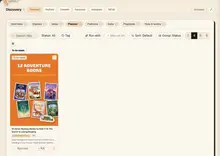
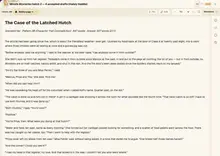
One workspace for everything your agents make. Chat is where you ask; the rest of the app is where you see, review and keep the work.
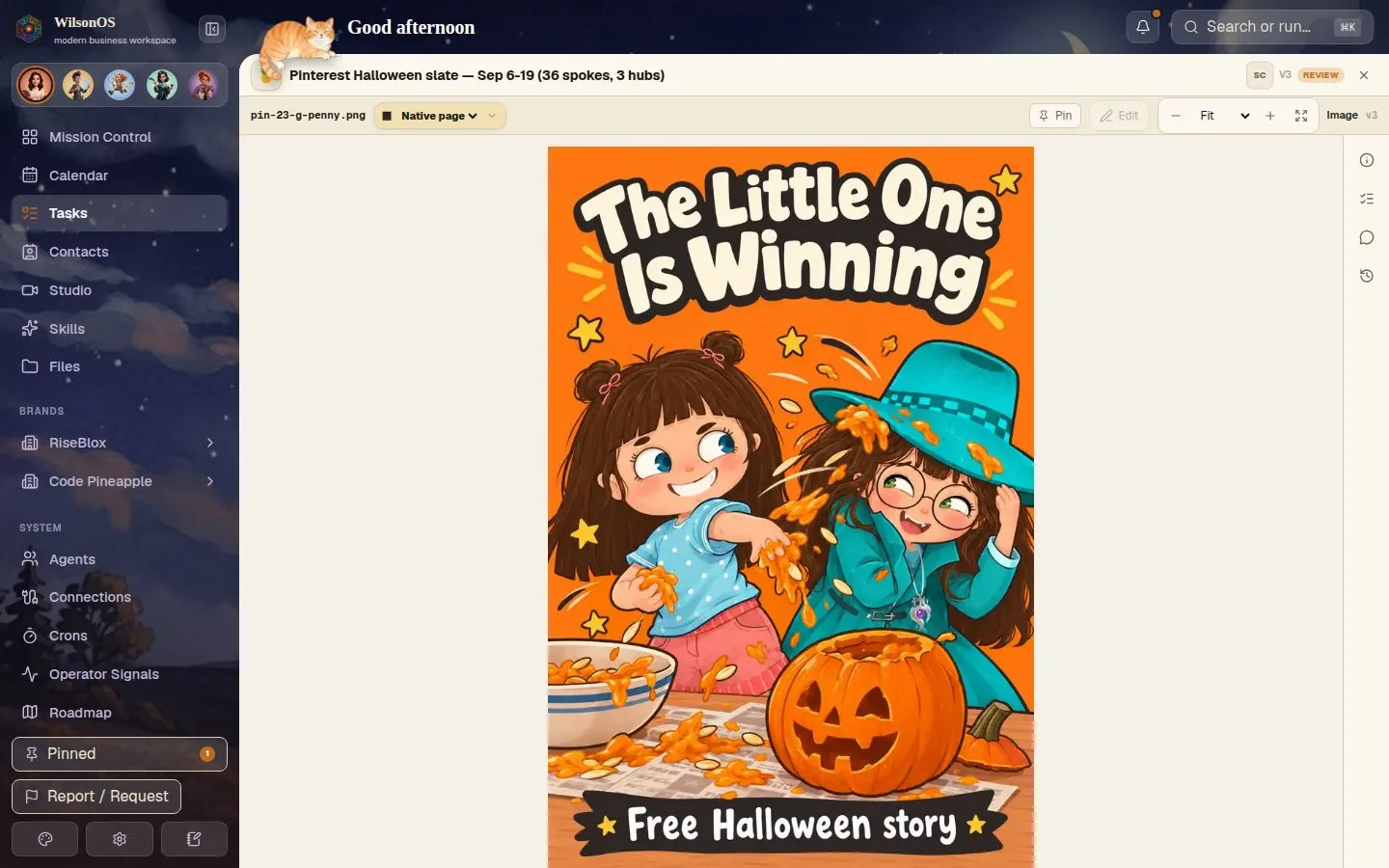
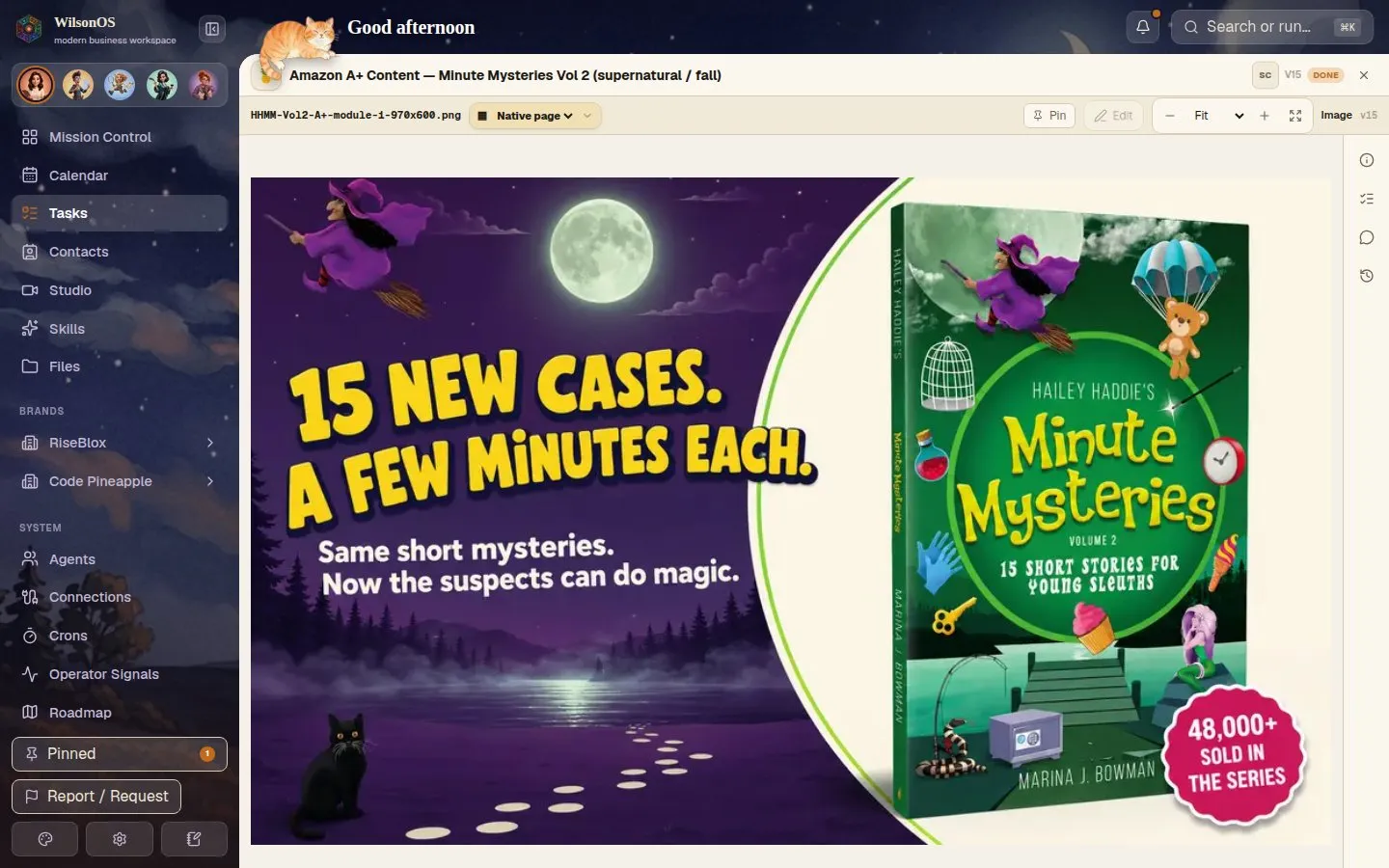
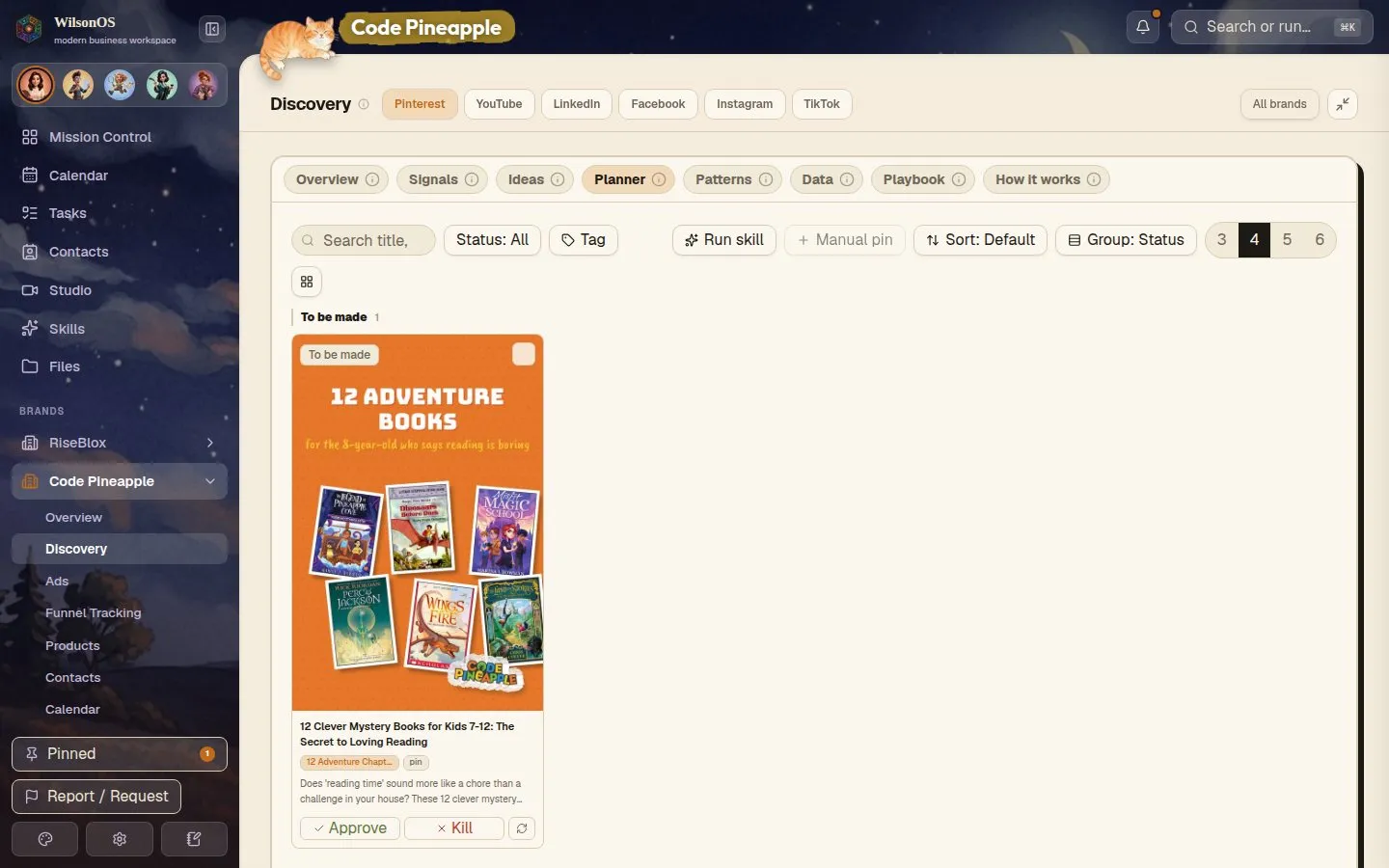
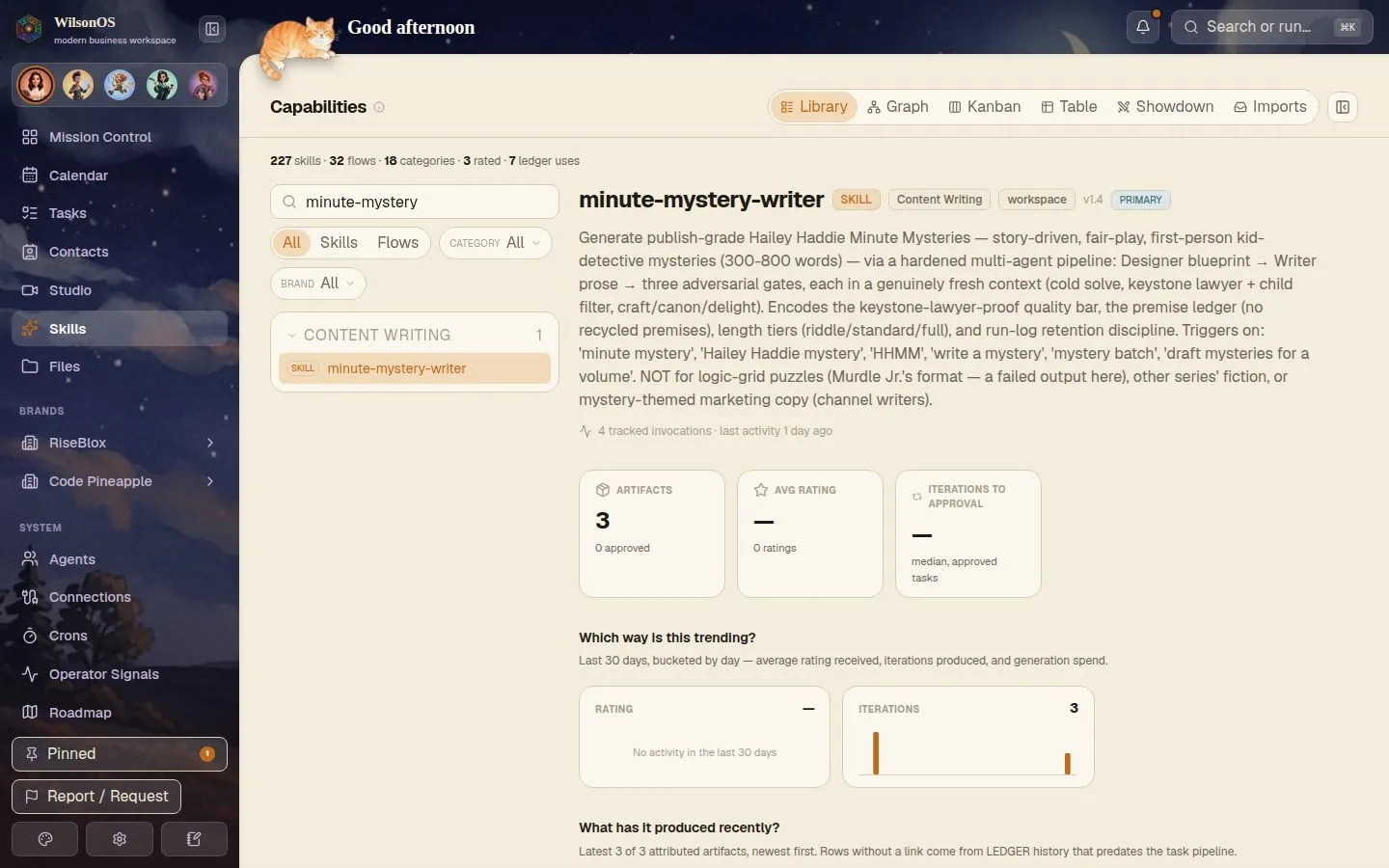
Real screenshots of the app. Brands not covered by these docs, the owner's name and spend figures were hidden before capture.
A short onboarding conversation: your goals, how you like to work, your hard rules, and each business you run.
Ask in chat, press a button in the app, or set a schedule. The agent breaks the job down and gets on with it.
You review versions and make the calls that are yours. What you correct is kept for next time.
The same team works across everything you run. Each example below is a skill or a workflow that can be added, swapped or improved; they are examples, not the edges of the product.
The personal area is Limited today; see What works today.
A capable agent’s most dangerous failure is confidence it has not earned. WilsonOS is held to five promises, and they are scored, not assumed.
People who run more than one thing: one or more businesses, and a life around them. It suits people who make decisions faster than they can carry them out, and who want to become more capable rather than merely busier.
Its strengths today are digital products and marketing: books, courses, video, resource packs, and the campaigns that sell them. It is not yet for businesses whose core records are not products, offers, campaigns and customers, and it is not for anyone who wants output with no one checking it. Trust is earned through checks and evidence, and the system says when it has not been earned yet.
Expect the first week to be as much about the agents learning your preferences as about output.
Follow one business through every stage, with the real outputs and the app views.
Sources: Don's product direction, 2026-09-15/16 (task 410 review) and 2026-10-06 (landing review), skills/landing-page (benefit-led page structure), docs/proposals/2026-05-28-north-star.md, docs/wilsonos-app/PRD.md §1, §3.5, docs/wilsonos-app/multi-tenant-conops.md §4 (onboarding interview), input/WilsonOS_Overview.html §00–01, "How to read this page", §09, docs/DECISIONS.md (ADR-028) · Last verified 2026-10-06