

Amazon A+ content
A+ content is the set of wide image panels below the description on an Amazon product page. For a children’s book it has one job: answer the parent’s real question — is this right for my kid? — before they scroll away. This walkthrough follows the panels for the second volume of Hailey Haddie’s Minute Mysteries, a collection of short mysteries a child solves from the clues on the page.
- 01Discovery
- 02Leads
- 03Conversion
- 04Delivery
- 05Nurture
Make the product page answer a parent's real question in their own words, so more of the people who arrive buy.
What you can do
Section titled “What you can do”- Ask for A+ content for a book; the agent grounds it in the listing, the search terms that convert, and real reviews.
- Approve at three gates — the grounding, a single storyboard, the finals — so nothing expensive is made before it is right.
- Get copy written in the buyers’ own words rather than the publisher’s.
- Trust a claim on the page because the agent checked it against the product.
The conversation
Section titled “The conversation”amazon-a-plus-contentBefore these ship: the headline says still a minute each, twice on the same panel. I measured the fifteen cases in this volume — the median is 444 words, from 341 to 612. Read aloud that is closer to four minutes than one.
How should the claim read?
Version 12: FOUR MINUTES EACH, and the body now says same short mysteries.
Make it "a few minutes" — and use that across the whole series.
What happens, and where you see it
Section titled “What happens, and where you see it”-
Gate A: grounding — Workbench
A product brief: the listing’s rating and category ranks, the search terms that actually convert, and five reviews quoted word for word. Nothing is designed yet.
-
Copy and module plan — Workbench
Four header panels and a comparison chart, with copy graded against the brand’s customer language and alt text for every panel.
-
Gate B: one storyboard — Workbench
All four panels rendered on a single sheet — one cheap render — to check layout, rhythm and colour before any final is made.
-
The reader-language pass — Workbench
After the storyboard review, headlines and body copy were rewritten in buyers’ own words from the reviews, without turning them into quotes.
-
Gate C: finals — Workbench
Two rounds of finals: the book re-rendered at its true trim size, the fourth panel’s headline cut from six words to three — GETS THEM THINKING — so the type could triple in size.
-
The claim — Chat, Workbench
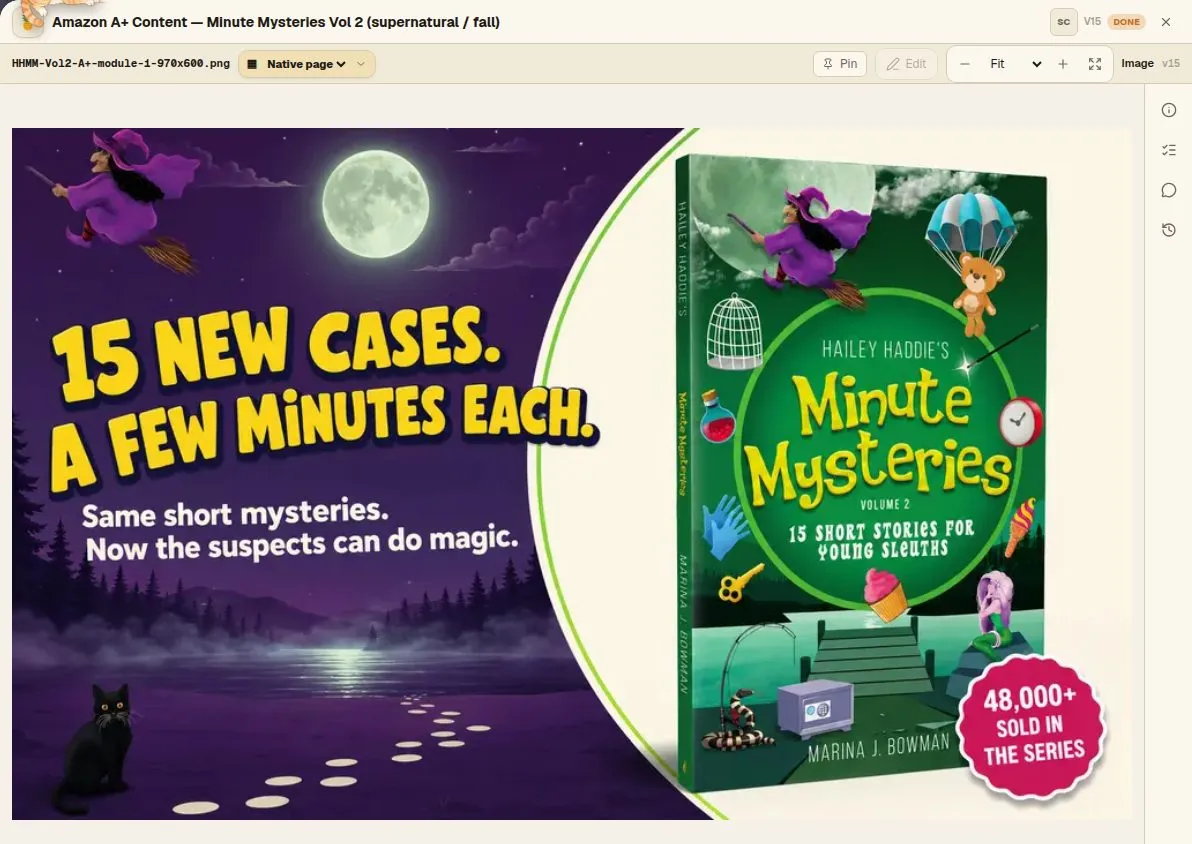
The measurement above, and two wording changes. Then the series badge was standardised and the first panel rebuilt from the real print cover. Version 15 closes it.
The real outputs
Section titled “The real outputs”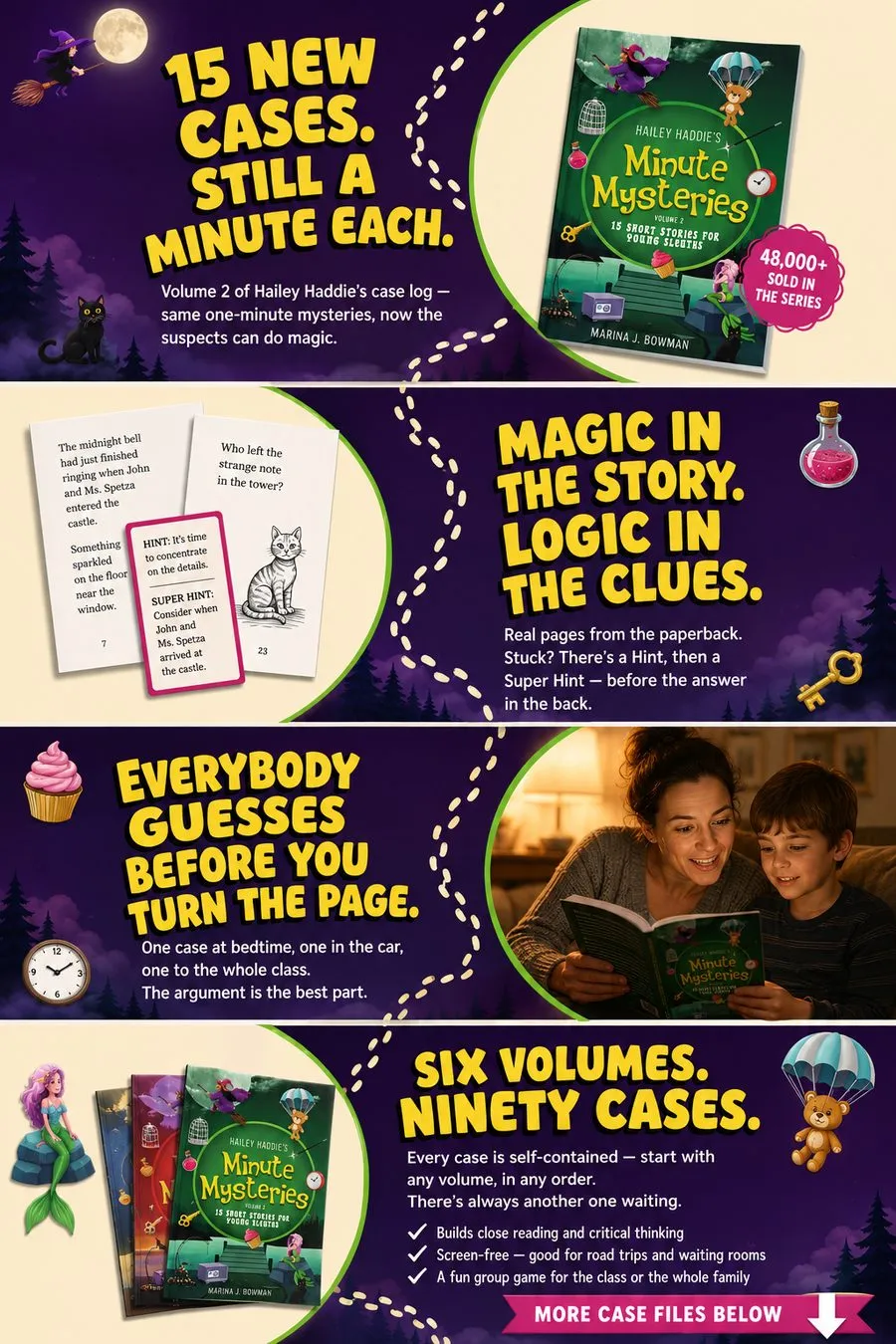
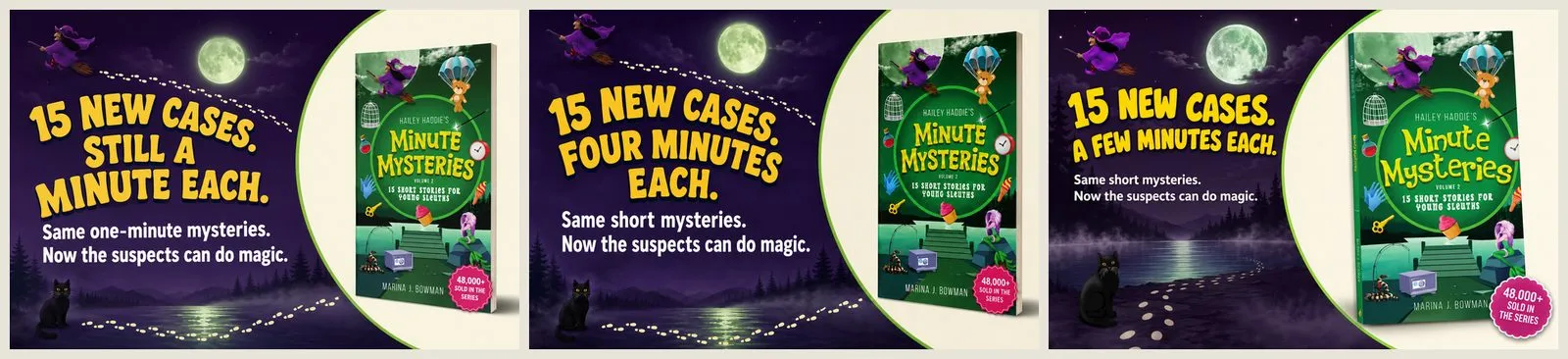
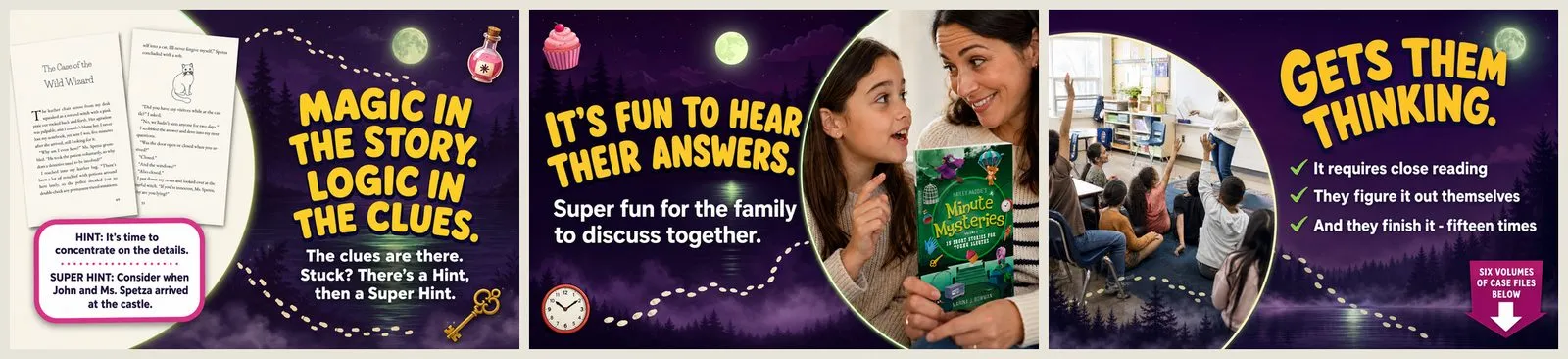
What to notice
Section titled “What to notice”- The agent checked a claim nobody asked it to check. A short-story collection promising “a minute each” invites a one-star review from the parent who timed it.
- Three gates, three prices. Grounding costs nothing, one storyboard costs one render, finals cost the most — so the expensive step comes last.
- The decision outlived the task. “A few minutes” became the standard for every volume in the series, not just this one.
Where it stands today
Section titled “Where it stands today”Making and reviewing the panels is available. A+ content for a book is uploaded in Amazon’s own author console; WilsonOS does not upload it, so you put the approved panels there yourself. Details and evidence: What works today.
Related
Sources: brands/code-pineapple/pipeline/aplus-minute-mysteries-vol-2 (task record, fifteen versions), flows/amazon-aplus-book · Last verified 2026-10-06